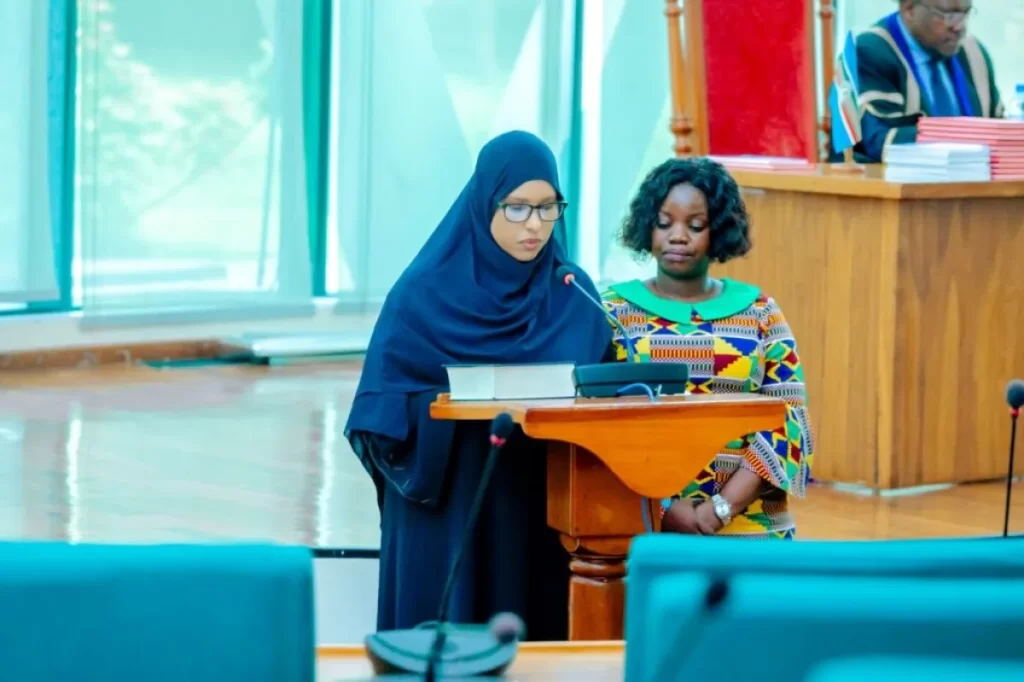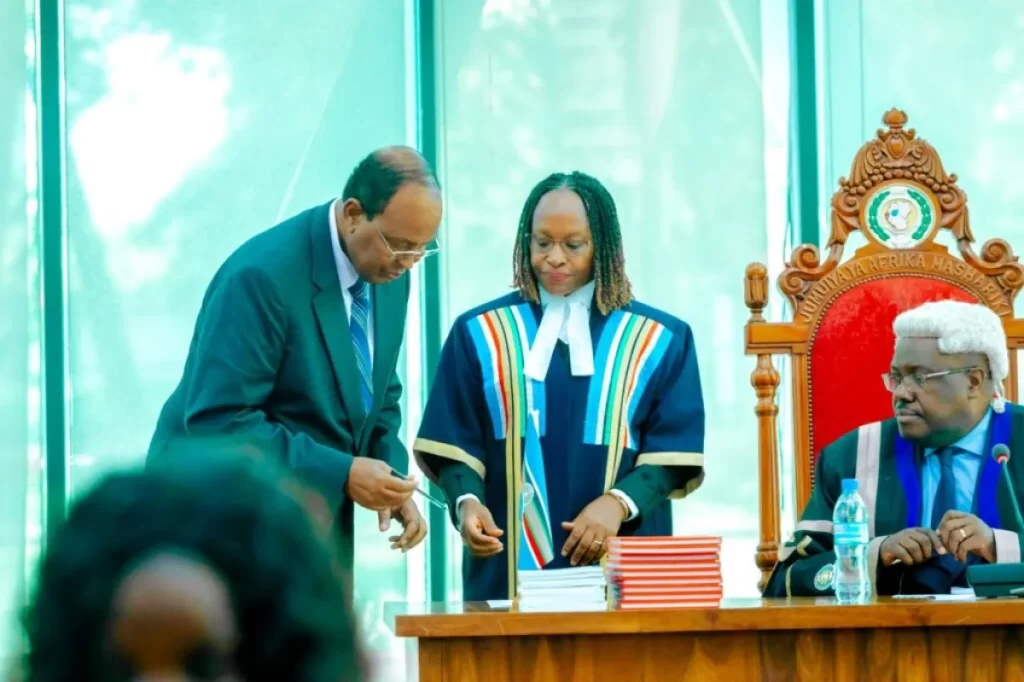

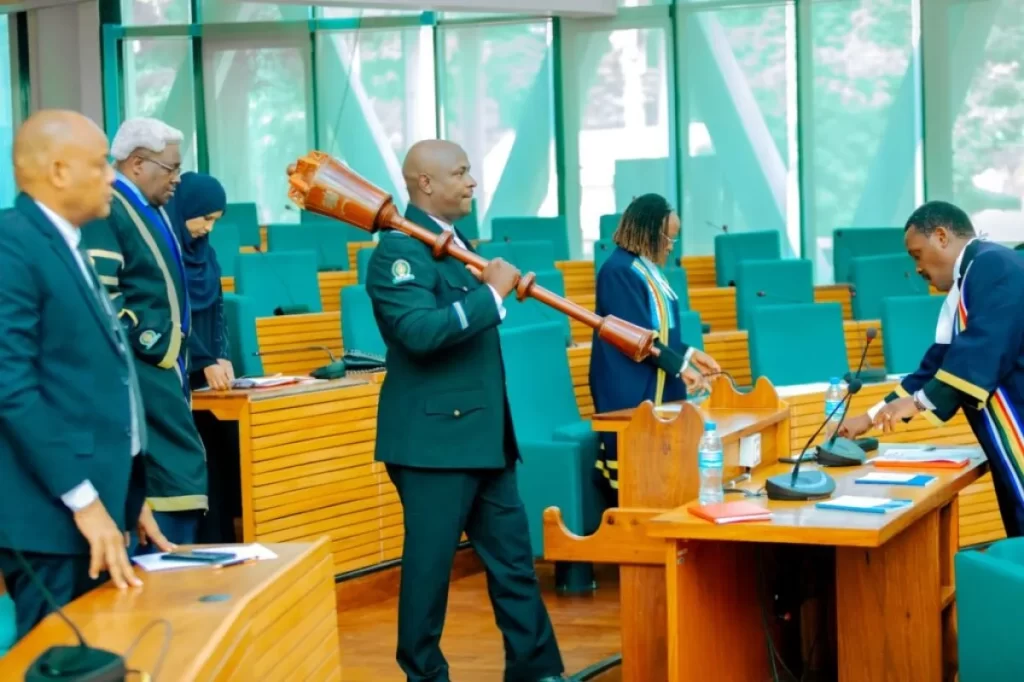
Arusha, Tanzania (Horn Observer) In the bustling city of Arusha, where regional ambitions often take shape, a quiet but historic moment unfolded.
Nine Somali representatives—Hussein Hassan Mohamed, Ilhaan Ali Gasar, Faysal Abdi Roble, Abdisalaam Hadliye, Abdirahman Bashir Sharif, Fahma Ahmed Nur, Fadumo Abdullahi, Abukar Mardaadi, and Sahra Ali Hassan—stood to take their oath as members of the East African Legislative Assembly.
For many outside the region, it may have seemed like a routine political ceremony. But for Somalia, it marked something far deeper: a return. For the first time, Somali voices would formally help shape the future of East Africa from within one of its key regional institutions.
Somalia’s Prime Minister Hamza Abdi Barre said that Somali MPs now carry both the responsibility and the opportunity to strengthen regional cooperation and help shape a more prosperous East Africa for all.
“I wish them every success as they embark on this historic role; may their service deepen collaboration and advance shared prosperity for Somalia and the wider East African region.” Mr. Barre said. “Today, Somalia does not simply take a seat at the table—it brings with it resilience, vision, and a renewed commitment to building a stronger, more connected East Africa.”
Not long ago, Somalia’s story in the global imagination was dominated by conflict and fragility. Yet this moment in Arusha told a different story—one of resilience, recovery, and re-engagement. It reflected years of steady effort to rebuild institutions, restore confidence, and reclaim a place in regional and international affairs.
Somalia brings with it more than just representation. It carries the energy of a people known for their entrepreneurial drive, a coastline stretching longer than any other on mainland Africa, and untapped resources that hold promise for trade and growth. Above all, it brings a young and ambitious population eager to connect, innovate, and contribute.
The newly sworn-in MPs now stand at the intersection of past challenges and future possibilities. Their role is not only symbolic—it is practical and urgent. They are tasked with strengthening cooperation across borders, helping to unlock economic potential, and ensuring that Somalia’s voice contributes meaningfully to the region’s shared progress.
For East Africa, this is an expansion of its collective strength. For Somalia, it is another step forward in a long journey of renewal. And for the wider world, it is a reminder that nations can rise, reimagine themselves, and take their place once more—stronger, wiser, and ready to shape the future.
As these representatives begin their work, Somali Officials said that they carry with them both responsibility and hope—the hope that their service will deepen regional unity and help build a more prosperous, connected East Africa for generations to come.